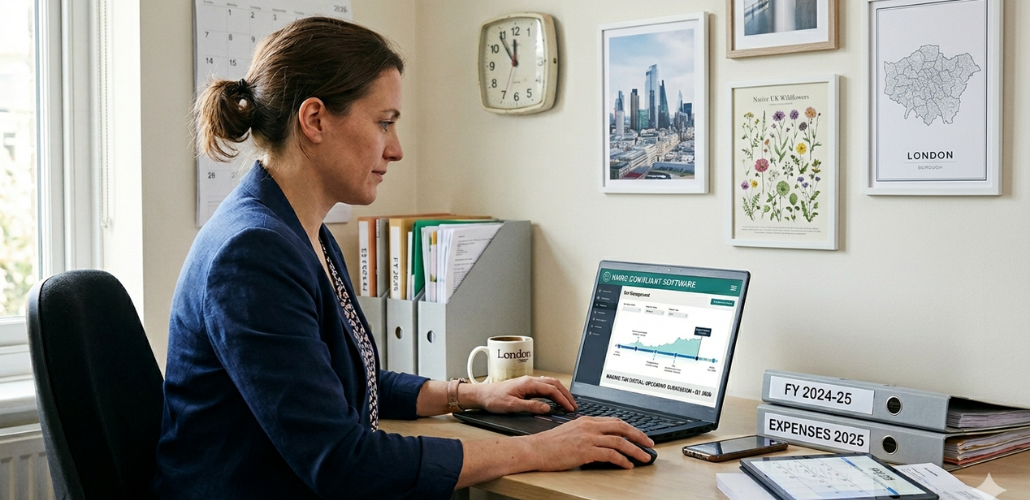
The tax system in the United Kingdom is going through a big change, and a lot of people still do not know how much everything is going to be different. The United Kingdom tax system is getting ready for Making Tax Digital 2026. This means that people will have to manage their taxes in a completely new way.
This new way is not about doing things once a year; it is about doing things all the time and using computers to do it. If you are a trader, a landlord, a freelancer, or you own a small business, you need to pay attention to Making Tax Digital 2026. This is not a small change; it is a big change in how you will do your self-assessment tax return UK.
The truth is that if you wait until it is too late, it could cause you a lot of problems. You might lose time, you might lose money. You will probably feel really stressed out. Waiting until the last minute is not a good idea when it comes to Making Tax Digital 2026 and your self-assessment tax return UK.
What is Changing in April 2026?
The HMRC tax changes April 2026 will bring in rules for people who earn a lot of money. These people will have to keep track of their money using computers and send in updates to HMRC often. They can not just send in one tax form at the end of the year.
This is because the government wants to make sure people are paying the amount of tax. The government wants to use computers to make sure everything is accurate. This means people will have to be more careful and make sure they are doing everything all year round.
For a lot of people, the way they do their tax return in the UK will not be as easy as it used to be. The HMRC tax changes in April 2026 will make it more complicated for people who have to do a self-assessment tax return UK.
Understanding Making Tax Digital 2026
At the heart of this transformation is Making Tax Digital 2026, a system designed to modernise tax reporting through software-based record keeping and quarterly submissions.
In practical terms, this means:
- You’ll need to maintain digital financial records
- Tax updates will be submitted more frequently
- Manual spreadsheets will no longer be enough for compliance
- HMRC-approved software will become essential
While this improves accuracy, it also increases the administrative workload for individuals who are not prepared.
For many taxpayers, this is where confusion begins, especially when juggling income from multiple sources or managing property portfolios.
Why Self-Assessment is Becoming More Complex
The traditional self-assessment tax system was already considered time-consuming by many. However, with the introduction of digital reporting requirements, the complexity is increasing further.
You now need to think about:
- Regular income tracking instead of yearly summaries
- Real-time expense categorisation
- Software compatibility with HMRC systems
- Increased risk of penalties for incorrect or late submissions
What used to be a once-a-year task is now becoming an ongoing responsibility.
This is why many individuals are now exploring professional support options and partnering with experts like Rivercross to stay compliant without disrupting their day-to-day work.
Why Outsourcing is Becoming the Smarter Choice
As the system becomes more demanding, more individuals are turning to outsource self-assessment UK services to manage their tax obligations efficiently.
Outsourcing is no longer just for large businesses; it is becoming a practical solution for freelancers, landlords, and small business owners who want to stay compliant without spending hours on paperwork.
Here’s why outsourcing makes sense:
- Experts handle compliance with changing HMRC rules
- Reduced chances of errors and penalties
- Time saved for income-generating work
- Seamless adaptation to digital tax systems
- Peace of mind during the transition to Making Tax Digital In 2026
Instead of trying to navigate complex updates alone, taxpayers can rely on professionals who deal with these changes daily.
Who Should Consider Outsourcing Before April 2026?
Not everyone will struggle with the new system, but many will feel the pressure. You should seriously consider outsourcing if you are:
- A sole trader with growing income streams
- A landlord managing one or more properties
- A freelancer working with multiple clients
- A small business owner without an in-house accountant
- Someone is already struggling with the self-assessment tax return UK filing
For these groups, outsourcing is not just a convenience; it is a strategic decision.
The Risk of Waiting Too Long
One of the biggest mistakes taxpayers can make is waiting until the changes are fully enforced.
Delaying preparation for HMRC tax changes April 2026 could lead to:
- Software setup delays
- Confusion during the first quarterly reporting cycles
- Increased chance of filing errors
- Penalties for non-compliance
- Stress during transition periods
Once the system fully transitions, accountants and outsourcing providers will also face high demand, meaning onboarding delays are likely.
How Outsourcing Actually Works
Many people assume outsourcing is complicated, but the process is straightforward.
Typically, a professional provider will:
- Collect your financial data
- Organise and categorise transactions
- Maintain digital bookkeeping records
- Handle quarterly submissions
- Complete the final tax filing accurately
This approach ensures your self-assessment tax obligations are managed consistently throughout the year, not just at deadline time.
It also ensures you stay aligned with the new requirements under Making Tax Digital 2026 without stress.
Why April 2026 is the Real Deadline
April 2026 marks the official transition into the new tax framework. This is not just a policy change; it is the point where compliance expectations fundamentally shift.
By this stage:
- Digital systems will be mandatory
- Quarterly reporting will be standard
- Manual processes will no longer be sustainable
This is why preparing early is critical. The earlier you adapt, the smoother your transition will be.
Conclusion
The shift toward making tax digital in 2026 is reshaping how individuals manage their taxes in the UK. While the new system promises efficiency, it also introduces complexity that many taxpayers are not ready for.
That’s why more individuals are choosing to proactively outsource self-assessment UK services before the April 2026 deadline. It’s not just about compliance; it’s about staying ahead of change and avoiding unnecessary stress.
If you want to ensure your tax process is fully prepared for the upcoming HMRC tax changes in April 2026, now is the time to act.
Get expert support from Rivercross and make your transition to digital tax compliance smooth, stress-free, and fully compliant.
FAQs
1. What is Making Tax Digital 2026?
Making Tax Digital 2026 is something the UK government is doing. It means people who pay taxes have to keep track of everything on computers and tell the government about their taxes often. Before, people only had to do this once a year.
2. Who will be affected by HMRC tax changes in April 2026?
The HMRC tax changes in April 2026 will affect people, like traders, landlords, freelancers and people who own small businesses and earn a lot of money. These people will have to follow the rules if they earn above a certain amount of money. The Making Tax Digital in 2026 rules will apply to them.
3. Can I still file a traditional self-assessment tax return UK?
The system will still exist in a revised form, but it will rely heavily on digital reporting and software-based submissions.
4. Why should I outsource self-assessment UK services?
Outsourcing my self-assessment in the UK services is an idea because it helps me reduce mistakes. I also save time. It makes sure I do what I am supposed to do with my taxes. It is easier for me to get used to the new digital tax rules.
5. Is making tax digital in 2026 mandatory?
Yes, people who are eligible to pay taxes will have to follow the reporting rules from April 2026. Making tax digital will be mandatory for these taxpayers from that time onwards. Making tax digital rules will apply to them. They will have to comply with it.